
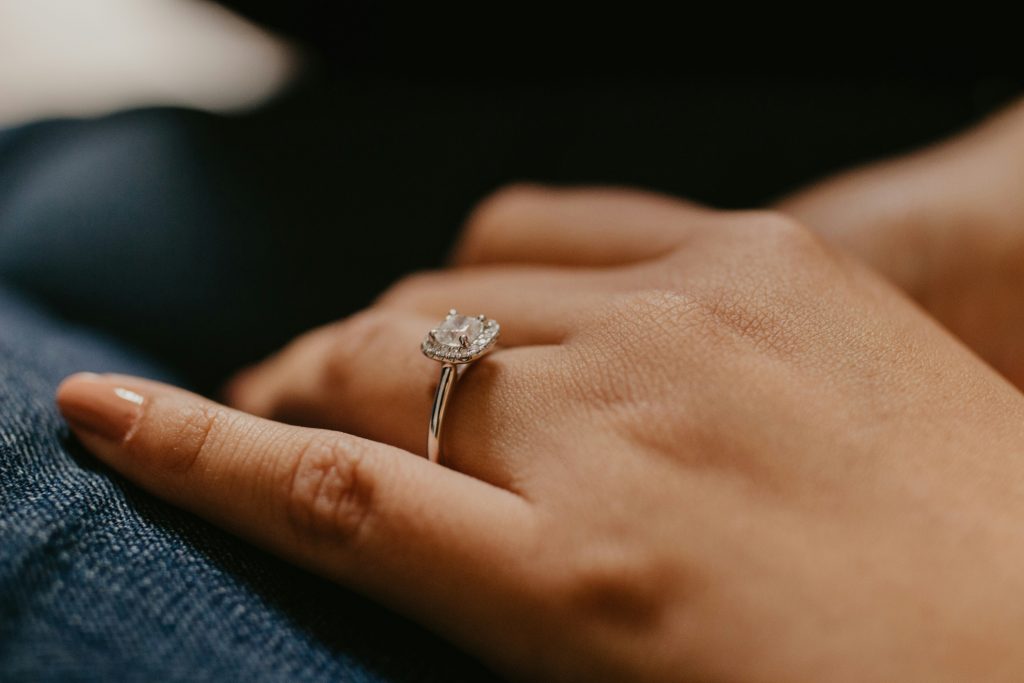
A changing idea of what an engagement ring can be
For a long time, engagement rings followed a familiar visual language. One central stone, elevated and solitary, was expected to carry the entire meaning of commitment. That image still holds power, but it is no longer the only one. As relationships themselves become more individual and layered, jewellery has quietly followed suit. Two-stone engagement rings have emerged as part of this broader shift, offering a way to express partnership that feels reflective rather than prescriptive.
Early on in any conversation about this style, it becomes clear that people are drawn to more than how it looks. The presence of two stones invites interpretation. It suggests balance, dialogue, and shared space. Within the first third of this discussion, it is worth noting that many now refer to these pieces as dual stone engagement ring designs, a phrase that captures both the structure and the symbolism without tying it to any single tradition.
The meaning behind two stones instead of one
At its core, a ring with two focal stones acknowledges that a relationship is made up of two distinct individuals. Rather than one element standing alone, the design allows each stone to exist in relation to the other. Sometimes they mirror one another. Sometimes they contrast. Both approaches feel intentional.
The symbolism is flexible, which may be why this style resonates so strongly today. For some, the stones represent two people choosing to move forward together. For others, they stand for shared values and personal identity, or past experiences alongside future hopes. There is no fixed explanation, and that openness allows the wearer to shape the meaning over time.
Unlike more traditional designs that arrive with a ready-made narrative, two-stone rings tend to feel personal from the start. They do not dictate how love should look. They simply make space for it.
Historical roots that still feel relevant
Although these designs can feel contemporary, their history stretches back centuries. In Europe during the late eighteenth and early nineteenth centuries, rings featuring two stones were exchanged as intimate tokens of affection. One of the most frequently cited examples involves Napoleon Bonaparte, who gave a two-stone ring set with a diamond and sapphire to Joséphine de Beauharnais. The stones were positioned closely, a visual metaphor for unity.
The style later appeared in Victorian jewellery, an era known for embedding meaning into gemstones and settings. Multiple stones were often used to tell stories, spell words, or represent loved ones. Two-stone rings fit naturally into this world of symbolism and sentiment.
As the twentieth century progressed, engagement rings became more standardised, particularly in Western cultures. It is only in recent decades that older forms have been rediscovered and reinterpreted, appreciated for their emotional depth rather than their novelty.
How design choices influence emotion
What makes dual stone engagement ring designs so compelling is how small decisions can dramatically change the feel of a piece. Stone shape is one of the most noticeable factors. Two identical cuts placed side by side create symmetry and calm. Mixing shapes, such as a round stone paired with a pear or emerald cut, introduces movement and contrast.
Colour also plays a powerful role. Some rings use two diamonds that differ slightly in size or tone, creating a quiet sense of individuality within unity. Others pair a diamond with a coloured gemstone. A sapphire, emerald, or even a soft-toned morganite can bring personal significance without overwhelming the design.
The setting determines how the stones relate to one another. When they touch, the effect is intimate and immediate. When they sit with a small amount of space between them, the design can suggest independence alongside connection. Neither approach is better. Each tells a different story.
Why this style feels right for modern relationships
Many couples today approach engagement with a sense of realism and intention. Relationships are often built over years, shaped by shared experiences rather than sudden gestures. Two-stone rings reflect that reality. They acknowledge that love grows through partnership, not hierarchy.
There is also a growing preference for jewellery that feels personal rather than performative. A two-stone ring does not always announce itself as an engagement ring at first glance. To some, it may simply look distinctive or elegant. That subtlety appeals to those who value private meaning over public display.
Individuality plays a role too. As people move away from uniform expectations, designs that allow for variation feel more authentic. Dual stone engagement ring designs offer that flexibility, whether through stone choice, setting, or overall proportion.
Living with a ring that has two focal points
From a practical perspective, two-stone rings often surprise wearers with how comfortable they are. Many designs sit lower on the finger than a traditional solitaire, which can make them easier to wear day to day. The distribution of weight across two stones can also create a sense of balance.
Over time, the ring often becomes a quiet companion rather than a static symbol. Some wearers find that the meaning of each stone evolves. One may come to represent a shared milestone, a challenge overcome, or a new chapter in life. The design allows for this kind of emotional layering without feeling forced.
This openness is part of what makes the style enduring. The ring does not lock its story in place. It grows alongside the relationship.
Cultural nuance and personal narrative
Jewellery has always reflected cultural values, and the renewed interest in two-stone designs mirrors a broader embrace of diversity and personal storytelling. Engagement no longer follows a single path, and rings no longer need to look a certain way to feel valid.
For couples with different cultural backgrounds, the duality of two stones can hold special meaning. Each stone might represent a heritage, a family influence, or a place that shaped them. In this sense, the ring becomes a meeting point of histories as well as individuals.
Even without a conscious narrative, many people are drawn to the design instinctively. It feels honest. It reflects how relationships actually work, through dialogue, difference, and shared ground.
Beyond trends and terminology
It is easy to label any jewellery style as a trend, something that will fade as tastes change. Two-stone rings resist that label because their appeal is rooted in human connection rather than fashion cycles. They have existed in various forms for centuries and continue to feel relevant because the ideas they represent remain constant.
For readers who are simply curious about jewellery, this style offers a reminder that meaning does not have to be loud or obvious. Sometimes, the most powerful symbols are the ones that leave room for interpretation.
In a world that often celebrates singular focus, choosing to honour duality feels quietly significant. Two stones, side by side, carrying separate stories while sharing the same setting.